Showing posts with label uk. Show all posts

Wednesday, October 10, 2012

NEWS,10.10.2012


US sends military troops to Jordan


The United States has sent military troops to the Jordan-Syria border to help build a headquarters in Jordan and bolster that country's military capabilities in the event that violence escalates along its border with Syria, Defence Secretary Leon Panetta said on Wednesday.Speaking at a Nato conference of defence ministers in Brussels, Panetta said the US has been working with Jordan to monitor chemical and biological weapons sites in Syria and also to help Jordan deal with refugees pouring over the border from Syria.But the revelation of US military personnel so close to the 19-month-old Syrian conflict suggests an escalation in the US military involvement in the conflict, even as Washington pushes back on any suggestion of a direct intervention in Syria.It also follows several days of shelling between Turkey and Syria, an indication that the civil war could spill across Syria's borders and become a regional conflict.Strong relationship"We have a group of our forces there working to help build a headquarters there and to ensure that we make the relationship between the United States and Jordan a strong one so that we can deal with all the possible consequences of what's happening in Syria," Panetta said.The development comes with the US presidential election less than a month away, and at a time when Mitt Romney, the Republican nominee, has been criticising President Barack Obama's foreign policy, accusing the administration of embracing too passive a stance in the convulsive Mideast region.The defence secretary and other administration officials have expressed concern about Syrian President Bashar Assad's arsenal of chemical weapons. Panetta said last week that the United States believes that while the weapons are still secure, intelligence suggests the regime might have moved the weapons to protect them. The Obama administration has said that Assad's use of chemical weapons would be a "red line" that would change the US policy of providing only non-lethal aid to the rebels seeking to topple him.Increased co-operationPentagon press secretary George Little, travelling with Panetta, said the US and Jordan agreed that "increased co-operation and more detailed planning are necessary in order to respond to the severe consequences of the Assad regime's brutality".He said the US has provided medical kits, water tanks, and other forms of humanitarian aid to help Jordanians assist Syrian refugees fleeing into their country.Little said the military personnel were there to help Jordan with the flood of Syrian refugees over its borders and the security of Syria's stockpiles of chemical and biological weapons."As we've said before, we have been planning for various contingencies, both unilaterally and with our regional partners," Little said in a written statement. "There are various scenarios in which the Assad regime's reprehensible actions could affect our partners in the region. For this reason and many others, we are always working on our contingency planning, for which we consult with our friends."A US defence official in Washington said the forces are made up of 100 military planners and other personnel who stayed on in Jordan after attending an annual exercise in May, and several dozen more have flown in since, operating from a joint US-Jordanian military centre north of Amman that Americans have used for years.He spoke on condition of anonymity because he was not authorised to talk about the mission on the record.Syrian refugeesIn Jordan, the biggest problem for now seems to be the strain put on the country's meagre resources by the estimated 200 000 Syrian refugees who have flooded across the border - the largest fleeing to any country.Several dozen refugees in Jordan rioted in their desert border camp of Zaatari early this month, destroying tents and medicine and leaving scores of refugee families out in the night cold.Jordanian men also are moving the other way across the border - joining what intelligence officials have estimated to be around 2 000 foreigners fighting alongside Syrian rebels trying to topple Assad. A Jordanian border guard was wounded after armed men - believed trying to go fight - exchanged gunfire at the northern frontier.Turkey has reinforced its border with artillery guns and deployed more fighter jets to an air base close to the border region after an errant Syrian mortar shell killed five people in a Turkish border town last week and Turkey retaliated with artillery strikes.Turkey's military chief General Necdet Ozel vowed on Wednesday to respond with more force to any further shelling from Syria, keeping up the pressure on its southern neighbor a day after Nato said it stood ready to defend Turkey.


IMF: Europe must restore confidence


Europe must do more to tackle its fiscal crisis, which is heaping extra pressure on an already-strained global financial system, the International Monetary Fund warned in a new report on Wednesday.Despite some new policy measures, among them a bond-buying programme aimed at helping debt-riddled nations tame their borrowing costs, the risks of a world credit crunch and recession loom, the IMF said."(European) policymakers need to take additional measures to restore confidence," said the Fund's Global Financial Stability Report ahead of its annual meeting this week in Tokyo and a day after cutting its global growth forecasts."Risks to global financial stability have increased and financial markets have been volatile as European policymakers grapple with the ongoing crisis," it added.The report comes a week after IMF head Christine Lagarde urged eurozone leaders to move fast to resolve the bloc's debt crisis. "No one has the luxury of time, this is really urgent," she told the French daily Le Figaro."The cost of solutions increases as time passes," she added.The European Central Bank last month announced a programme to buy the government bonds of debt-ridden eurozone nations under strict conditions but it remains unclear whether troubled countries, notably Spain, will accept the offer."If there is no demand and if this is related to domestic political considerations, that would be unfortunate," Jose Vinals, director of the IMF's monetary and capital markets department, told a news briefing in Tokyo as the report was released Wednesday.The eurozone launched Monday its much-awaited €500bn European Stability Mechanism rescue fund, which is seen as a major step in the bloc's defences against a debt crisis that has pushed it back into recession."(It) gives a lot of comfort that the size of the firewall has become sufficiently flexible and that makes a big difference," Vinals said.The report's recommendations include cutting public debt and deficits "in a way that supports growth" and a "clean-up of the banking sector, including recapitalising or restructuring viable banks and resolving nonviable ones".It also warned that a "further deterioration in the euro area crisis is the biggest risk to global financial stability, but rising imbalances elsewhere are also a cause for concern".The United States and Japan both face looming fiscal hurdles, which, if not cleared, could upset the world financial system, the report said."Both countries require medium-term deficit reduction plans that protect growth and reassure financial markets," it said.Emerging economies have fared relatively well through the several tumultuous years of global economic uncertainty, but they "need to guard against potential shockwaves from the euro area crisis, while managing slowing growth in their own economies".On Tuesday, the IMF's added to concerns about the health of the global economy, warning of a possible recession and cutting back its growth forecast for this year to 3.3%, from July's estimate of 3.5%.Growth will only hit 3.6% next year - lower than the 3.9% predicted in July - as even powerful emerging economies like China, India and Brazil hit the brakes, the Fund said.But those assumptions are based on Europe's leaders tackling the debt crisis and US politicians backing off harsh spending cuts and tax hikes slated for January 2013."Failure to act on either issue would make growth prospects far worse," the Fund said in the World Economic Outlook report.

IMF chides EU for 'critically incomplete' crisis response


The International Monetary Fund has urged European policymakers to deepen the financial and fiscal ties within the euro area with some urgency to restore sagging confidence in the global financial system.The IMF's stark tone on the euro area debt crisis in its semi-annual checkup of the world's financial health was in marked contrast to the mood in Europe, where a European Central Bank decision to buy bonds of countries that accept an assistance programme has removed immediate concerns about the survival of the euro."Despite many important steps already taken by policymakers, this agenda remains critically incomplete, exposing the euro area to a downward spiral of capital flight, breakup fears and economic decline," the IMF said in its Global Financial Stability Report (GFSR) released today.It said the euro area's debt crisis was the main threat to global financial stability, which had weakened in the last six months to leave confidence "very fragile".The euro area's plodding progress means European banks are likely to offload $2.8 trillion in assets over two years to cut their risk exposure, an increase of $200 billion from a prediction six months ago, the IMF estimated. That could shrink credit supply in the periphery by 9% by the end of 2013, crimping economic growth.The report adds to a gloomy backdrop ahead of the IMF's semi-annual meeting to be held in Tokyo later this week, which will gather the world's financial leaders.On Tuesday, the Fund said the global economic slowdown was worsening as it cut its growth forecasts for the second time since April and warned US and European policymakers that failure to fix their economic ills would prolong the slump.A scenario where Europe muddles through, addressing haphazardly each new flare-up in the protracted crisis rather than adopting a comprehensive plan, would prove costly, Jose Vinals, director of the IMF's monetary and capital markets department and the main author of the financial stability report, said."The more time that goes by without a complete solution, the more are the eventual costs for everybody of resolving the crisis," he told  in an interview.Europe's troubles should also serve as a lesson to the heavily indebted United States and Japan that delaying the necessary policy adjustments until markets force their hands would lead to "harsher economic outcomes", Vinals told a briefing."We should not let the current market conditions, which have improved, lead to a false sense of security," he said.Still, ECB Vice-President Vitor Constancio said his message to the IMF and World Bank gatherings is that Europe has made much progress in recent months."That should be encouraging for the world economy," he told Reuters in Tokyo.Measures carried out by Europe included an unprecedented strengthening of economic governance and deep structural reforms, said Simon O'Connor, the European Commission's spokesman on economic and monetary affairs."No one should underestimate how far Europe has come since the start of the crisis," he said in reaction to the IMF report.Shrinking balance sheets A German finance ministry source said in Berlin that the EU's most powerful member would strive to ensure that the debt crisis was not the sole focus of the IMF meeting.Last week, Canada's Finance Minister Jim Flaherty expressed his latest sign of frustration over progress in resolving the crisis by saying it represented a "clear and present danger".US Treasury Secretary Timothy Geithner said on Tuesday that resolving the euro area's debt problems would take time."Even if one is optimistic about the will and capacity to manage through this, you are still likely to see a very, very challenging growth environment in Europe for a long period of time," Geithner said during a visit to New Delhi.On Tuesday, ECB President Mario Draghi said the bond buying programme, although not yet in operation, provided a "fully effective backstop" for the euro zone to avoid destructive scenarios and had already helped calm market fears.The IMF acknowledged that the ECB's bond buying agreement had restored some market confidence and narrowed the spread between core and peripheral debt in the region.But private investors still lacked confidence in peripheral European markets and the difference between the yields on peripheral and core debt from banks and companies remained high, threatening any recovery, it said.Under current policies, the IMF estimated European banks will shed $2.8 trillion in assets between the third quarter of 2011 and the end of 2013, higher than the $2.6 trillion it had predicted in April, further squeezing credit availability.


Wall Street stocks fall


US stocks fell on Wednesday, a day after earnings season opened with Dow component Alcoa posting a quarterly net loss.Shares of Alcoa dropped 4.5% after the company predicted China's slowing growth will weaken worldwide demand for aluminium.Shares of Chevron shed 4.4% after it said third-quarter earnings will be "substantially" lower than in the previous quarter.In afternoon trading in New York, the Dow Jones Industrial Average shed 0.79%, the Standard & Poor's 500 declined 0.55%, while the Nasdaq Composite Index fell 0.48%."The fear is that this is going to be a really bad earnings season," Hank Smith, chief investment officer at Haverford Trust in Radnor, Pennsylvania, told Bloomberg News. "If S&P 500 earnings come in better than expectations, the markets are going to view that positively. We're off to a good start but we've got a long way to go," he said.Investors are nervous about the recent rally in equity markets."The temptation to sell is out there," John Brady, managing director of RJ O'Brien & Associates in Chicago, told Reuters."Equities have had a tremendous year, and the outlook is very unclear. So why not reduce risk? It's hard to imagine an additional 20% rally from here in the next three or four months," said Brady.Indeed, the American economy "generally expanded modestly since the last report," the Federal Reserve said in its latest Beige Book business survey based on reports from 12 district Fed banks."Consumer spending was generally reported to be flat to up slightly since the last report," according to the Fed. "Vehicle sales were also generally characterised as stable but up from a year earlier and generally at favourable levels," while "residential real estate conditions improved since the last report."However, "employment conditions were little changed since the last report."In Europe, the Stoxx 600 Index finished the day with a 0.6% slump from the previous close. Benchmark indexes dropped also in Germany, the UK and France.Some investors are concerned that the current valuations are not justified by the outlook for earnings.The Stoxx 600 is trading at 11.9 times the estimated earnings of its companies, higher than its five-year average of 11.5, data compiled by Bloomberg show. The gauge last month reached a price multiple of 12.3, the highest since 2010.Among other sombre notes was a surprise slump in China's car sales, the latest sign that the pace of growth in the world's second-largest economy is flagging.The concern about earnings and equity valuations helped the US Treasury's auction of US$21 billion in 10-year debt draw solid demand."The 10-year note auction was very stellar-coming in better than expected-and equities are weak, giving support to Treasuries," Larry Milstein, managing director in New York of government-debt trading at RW Pressprich & Co, a fixed- income broker and dealer for institutional investors, told Bloomberg."There is still pretty significant demand out there still for yields and safety," he said.To be sure, it was not all bad news.Shares of Wal-Mart climbed to a record US$76.8. The world's largest retailer said it is seeing growth in both large and small US stores and has had a strong start to layaway sales ahead of the holiday season, according to Reuters.Costco, meanwhile, also provided investors with a good reason to buy the stock, last up 2.7%, as the company posted better-than-expected quarterly earnings.

Friday, June 15, 2012

NEWS,15.06.2012.

Euro zone won't let Greece go easily - economist


If Greece leaves the euro zone it could send a signal to other struggling European economies they are better off leaving too economists says. As Greece heads to the polls this weekend, the world waits to see which way the population votes on austerity measures.But University economist Professor Christoph Schumacher says Greece is too big to fail.He that on top of the 1 trillion euros it will cost the region in the event of a Greek exit, it will send the wrong message to other struggling euro zone economies."Imagine Greece doing well leaving the euro zone - that would send the message to countries like Portugal, Spain, Italy that if we devalue our currency and boost our economy, I believe Greece might send the signal of the end of the euro," he said.Schumacher said he does not think the euro zone will allow Greece to leave easily.He said the people of Europe want to be united and will not let someone go just because they are struggling."But the solution with the austerity measures at the moment may not be the right way to go because it will not give Greece the chance to recover," Schumacher said.He has said so far austerity has not helped the Greek economy.According to Schumacher, in the past two years Greece's GDP has fallen by 20%, its unemployment has risen to 24%, and for people under 25 years old the unemployment rate is over 50%.And if it does leave, "the whole world will feel it", according to the economist."They already see the effects right The Official Cash Rate, said it is "monitoring Europe closely" and if things seriously deteriorated, would re-introduce liquidity facilities it made available during the global financial crisis.Schumacher said even if the socialist party wins the election, austerity measures will be challenged but they may not necessarily leave the euro zone.The mood in Greece Greeks are "pretty amped" about the election this weekend. The leaders of the pro and anti-austerity parties are holding rally."I guess it's really the last hurrah to fire up the base and get people to turn out,the event is a "bit of a black box" because no polling has been allowed days out from the election.


UK to flood banking system with 100b pounds


The UK government and central bank will flood Britain's banking system with more than 100 billion pounds ($155.43 billion), seeking to pump credit through an economy struggling to escape recession under the "black cloud" of the euro zone crisis.In his annual Mansion House policy speech to London financiers on Thursday, Bank of England Governor Mervyn King said Britain would launch a scheme to provide cheap long-term funding to banks to encourage them to lend to businesses and consumers.He also said the bank would activate an emergency liquidity tool.Treasury officials said the government plan could support an estimated 80 billion pounds in new loans, while the central bank's separate scheme will provide monthly 5 billion pound tranches of six-month liquidity to banks.King said the case for pumping more money into the economy via further purchases of government bonds had increased as the outlook for the economy had worsened, although he again rejected calls for the central bank to buy private assets.King said the euro zone's woes were leading to a crisis of confidence in Britain which was leading to a self-reinforcing weaker picture of growth."The black cloud has dampened animal spirits so that businesses and households are battening down the hatches to prepare for the storms ahead," he said.Britain's action comes just before cliffhanger Greek elections this weekend that could determine the fate of the euro zone, as well as a meeting of the leaders of the world's major economies next week to find ways to tackle the currency bloc's crisis and spur the global economy.British finance minister George Osborne warned of the huge dangers from a collapse of the euro area. He again urged euro zone leaders to fix the crisis and said Britain was taking action to protect its own economy."We are not powerless in the face of the euro zone debt storm," Osborne said in his speech at Mansion House. "Together we can deploy new firepower to defend our economy from the crisis on our doorstep."Britain is still reeling from the 2007-2009 financial crisis that has left many Britons poorer and forced the country to bail out big banks with tens of billions of pounds of taxpayers' money.The government on Thursday announced a sweeping reform of bank regulations aimed at making financial institutions safer, and avoiding a re-run of the crisis which has pushed Britain into recession twice in the last four years.Cash boost Britain slid back into recession around the turn of this year, piling pressure on Osborne's embattled Conservative-led coalition government to come up with new ways to boost growth.The government has pinned its fortunes on a tough austerity plan of tax hikes and spending cuts to erase a budget deficit which still comes in at around 8% of GDP.Osborne defended his debt-cutting measures, arguing that they gave the Bank of England the leeway to keep monetary policy loose, and said there was still more the central bank could do.BoE Governor Mervyn King said the central bank would complement its quantitative easing asset purchase scheme with new steps to encourage bank lending and reduce their funding costs, which have rocketed as a result of the euro zone crisis.The BoE and finance ministry have designed a new scheme, to be launched in a few weeks, that would offer banks loans with a maturity of possibly 3-4 years at below current market rates.The loans would be made available on condition that banks increase their lending to businesses and households.In addition, the central bank will activate its Extended Collateral Term Repo facility, created in December, to provide six-month liquidity to banks against a wide range of collateral.King said now was the right time to activate the scheme, which is aimed at helping banks through phases of exceptional stress.King hinted that the central bank may also restart its QE programme, which it halted in May having bought 325 billion pounds of British government bonds, and countered accusations that the scheme had lost its effectiveness."With signs of a deterioration in the outlook, especially in world markets, the case for a further monetary easing is growing," King said.

Thursday, June 7, 2012

NEWS, 07.06.2012.

Greece pressured to close down banks

The European Commission is pressing Greece to wind down certain banks, possibly including its fifth-largest lender ATEbank, EU sources said.Although it is the responsibility of Greece's central bank to close a struggling lender, the EU's executive also has a say under state-aid rules, which allow it to refuse a request to rescue a bank if the Commission considers it too costly to save - effectively forcing the bank to be wound up.Throughout the crisis, the Commission has rarely used the full extent of its state-aid powers and few European banks have been closed. If it were to use them in Greece, it would mark a more aggressive stance in tackling weak European banks at the heart of the crisis. It could use the same powers to wind up banks in Spain and Portugal, one of the sources said."We are moving into a new phase with Greece, Portugal and Spain," said one of the sources, who spoke on condition of anonymity because of the sensitivity of the matter. "Some banks are going to be squeezed. Some are going to be closed down."It is always a balance," the source said, explaining that if a bank is central to a country's financial stability it might need rescuing, but otherwise it may have to be let go."If you have a financial stability component, then you could be prepared to rescue a bank, but we are beyond that point now in a number of countries," the official said. "ATEbank will have to be closed or wound down over time."ATEbank, the Greek central bank and the Greek finance ministry all declined to comment. ATEbank management has in the past proposed merging all state-controlled banks, including the Hellenic Postbank, into one.If ATEbank were shuttered, meanwhile, it would not mean that the whole of Greece's banking system was collapsing. Other key Greek banks are not the same danger and could benefit from any refocused capital.No decision will be taken until after Greece holds elections on June 17. The outcome of the vote, which polls suggest could be won by a far-left coalition opposed to Greece's EU/IMF bailout, could fundamentally change Greece's ties to the EU.Last month, Greece's four biggest banks, National Bank , Alpha, Eurobank and Piraeus Bank , received 18 billion euros in capital under the joint EU/IMF bailout, a 130-billion-euro programme that involved writing down the value of Greece's privately-owned debt, including sovereign bonds held by Greek banks.ATEbank, a state-owned agricultural lender founded in 1929, did not get money under the bailout after failing to present a plan for its own longer-term commercial viability and is now the focus of concern, the sources said.The Greek authorities have started to make early preparations to wind down ATEbank, a process of liquidation that would not mean immediate closure but which is expected to begin in the second half of the year, one of the sources said.A Greek government source said shutting down the bank was a likely scenario, but reiterated the importance of the elections and said it would be some time before a decision was taken.A spokesman for Joaquin Almunia, the EU's competition commissioner, said a restructuring plan for ATEbank, approved last year, envisaged further steps to restore the bank to health. This could include recapitalisation measures."We expect new aid measures to be notified to the Commission. When this is the case we will assess the situation of the bank," the spokesman said.Under any winding up, depositors, who had more than 17 billion euros at the bank as of September last year, would be protected by the country's deposit guarantee scheme, which protects the first 100,000 euros of any deposit.The resources to pay for the winding down, which could include setting up a bad bank for risky loans, would come from the Hellenic Financial Stability Fund, at least in part. The Hellenic Stability Fund was set up in July 2010 to help restabilise Greece's banking system.Any closure of a bank in Greece, whose future could determine the survival of the euro, would be highly sensitive. None of the country's major banks were wound up in the crisis.But officials believe the money left in the country's aid programme - around 7 billion euros currently, with the possibility of 25 billion more from the EU/IMF bailout funds - is insufficient to recapitalise all banks and that some must be sacrificed to secure the most important lenders.Dire situation Greek banks suffered heavy losses on the government bonds they own when the country negotiated a writedown of its debt, known as private sector involvement (PSI), earlier this year."This is such a dire situation," said another source. "PSI left Greek banks with huge writedowns and many have negative capital as a result. We cannot recapitalise all the banks."Some in the Greek administration fear that closing a bank could send an unwelcome signal."At this particular moment, you have the issue that the closing of a bank can trigger higher depression because of the perception," said one Greek official. "They are going to create even more destabilisation in the economy."ATEbank, which failed a pan-European stress test last July, had customer loans of more than 20 billion euros in September 2011, the most recent records available. The bank, which expanded beyond its agricultural roots into mainstream commercial banking between 2000 and 2009, racked up heavy losses on bad loans to farmers and consumers and suffered a large writedown in the value of its Greek government bond holdings.In the absence of a pan-EU framework to wind down banks, the Commission's power under the state-aid regime, has made it the bloc's de facto resolution authority for troubled lenders.Winding up a bank in Greece would be left chiefly to the country's central bank and the European Central Bank.While the United States has closed hundreds of banks since the subprime mortgage crisis, European countries have been reluctant but there has been a gradual shift in this thinking."In Europe, weak banks one way or another have been taken over by bigger banks," said a central bank source."However, I think there are some cases where this is difficult because the condition of the banks is such that it doesn't make sense to keep the bank alive."Ireland's Anglo Irish Bank and Germany's WestLB are among the rare examples of banks that were shuttered in the crisis. Denmark also closed a number of small lenders.


UK retail bosses take bonus cuts


The chief executives of major British retailers J Sainsbury and Marks & Spencer have both taken cuts in their bonuses after failing to meet targets and as recession forces them to scale back growth plans.Philip Clarke, head of rival Tesco, last month forewent his annual bonus, paying the price for a weak performance in the UK and heading off an outcry by investors increasingly critical of excessive executive pay.Marks & Spencer's (M&S) annual report published yesterday showed that Chief Executive Marc Bolland has taken the biggest pay cut to date among Britain's leading retailers.M&S, Britain's biggest clothing retailer, said Bolland's total pay and bonus package of just under 1.7 million pounds ($2.6 million) last year was over 60% below the 4.4 million pounds he received the year before.On top of a basic salary of 975,000 pounds, pension contributions and perks such as a car and driver, Bolland received a bonus of 663,000 pounds last year which was roughly a third of his full entitlement of up to 200% of salary.Sixty% of his full bonus entitlement is dependent on profit before tax and he received nothing in relation to this performance measure after a 1.2% drop - the first fall in three years.The cut comes amidst a round of high profile shareholder revolts overexecutive pay at companies like Barclays, Inmarsat and Prudential in a phenomenon dubbed the "shareholder spring".Investor resistance to big pay rises at underperforming firms have also led some executives such as Aviva boss Andrew Moss, and Sly Bailey, head of newspaper group Trinity Mirror, to quit.Even at companies managing to outperform some executives have chosen to err on the side of caution.Sainsbury said Chief Executive Justin King had taken a 9% cut in his overall package, despite the fact Britain's No.3 grocer last month posted 7% rise in full-year profit that came in at the top end of expectations.King's basic salary rose to 920,000 pounds from 900,000 a year earlier but his annual cash bonus, share awards and long-term incentive plan all received haircuts, reducing his total package to just under 3.4 million pounds from 3.7 million a year ago.King had been entitled to a cash bonus of up to 125% of salary but received 55.9% after the remuneration committee at Sainsbury judged that while profit came in on target, sales had been "below threshold".Many of Britain's retailers are struggling as shoppers grapple with higher prices, muted wage growth and government cutbacks; with confidence further undermined by worries over job security, a shaky housing market and the euro zone crisis.

Sunday, May 13, 2012

NEWS,13.5.2012

France and Greece out to change Europe


Two politicians have within a week thrown the spanner into the eurozone’s prevailing economic thinking. It isn’t all that bad.One is Francois Hollande, to be sworn as French president on Tuesday. He chased the diminutive but combative Nicholas Sarkozy from office with a 51.6 per cent election victory a week ago.Unlike the 58-year-old Hollande, an old timer in the French Socialist Party politics, Greek Alexis Tsipras is a newcomer to parliamentary politics. His Synaspismos party and allied Coalition of the Radical Left emasculated the leading political parties in election last Sunday, making formation of a government impossible. The helicopter-like political ascent of Mr Tsipras, 37, is impressive. He rose from the Communist Youth of Greece to head a parliamentary party at 33. He entered Parliament three years ago. His ability to manage national affairs though remains unknown.Greece isn’t an economic shaker in the eurozone or Europe. France is. However, Mr Hollande and Mr Tsipras have one thing in common: they loathe fiscal austerity. That’s tight control of government spending. German Chancellor Angela Merkel is the leading proponent. Unfortunately, her sidekick, Sarkozy, is in a political freezer.Governments can’t raise all the money they need from their main source of income: taxes. Consequently, they borrow or issue bonds to meet the deficit.Debts and bonds aren’t a problem par se. The problem comes when governments fail to meet repayment schedules or the value of bonds decline to levels that make investors consider them junk. For reasons known to economists and financial wizards, trouble begins when a country’s debt hits 7 per cent of the Gross Domestic Product. At $661.6 billion—lots of money in any language--Greece’s debt hit 160 percent of the GDP. Athens couldn’t meet repayment schedules.There are several ways of dealing with the problem. They include rescheduling, reducing government spending, declaring bankruptcy, and getting a consortium of nations, multilateral lenders like the International Monetary Fund and regional organizations” member states, for a bailout. Bailouts aren’t free and conditions are attached. Greece isn’t the only eurozone country facing this problem. Portugal and Spain are most hit. Italy is staring at one. France, one of Europe’s top borrowers, fears it’s headed there.The 17-member eurozone, like a ship crew, prefers all hands, including the sick, on deck. Better find a cure for the sick and fast. The cure for the sick members is bailout. Conditions include massive cuts on government spending—austerity. That means many people have lost benefits and jobs.They are angry and have voted out political parties responsible. Greek voters were especially vicious. Mr Tsipras, who has described the agreement for the Greek bailout “null and void,” is riding this wave. However, he’s yet to offer an alternative. Hollande, more mellowed by age and temperament, has offered a sweetener to austerity policies, an element of growth.

Thousands march against economic gloom in Spain, UK


Thousands of Spaniards fed up with economic misery and waving banners against bankers marched on yesterday to mark the first anniversary of the grassroots "Indignados" movement that has sparked similar protests around the world.Up to 600 people denouncing the Bank of England rallied in London and a Reuters witness said scuffles broke out between some demonstrators and police, with at least 12 arrests.The Indignados and the offshoot Occupy and Take the Square movements had called for a global day of action against anti-debt austerity policies and the widening gap between rich and poor, but nowhere were protests as large as in Spain.A year after tens of thousands set up a month-long camp in Madrid's central Puerta del Sol square, drawing international attention, indignant Spaniards have even more to be angry about.Unemployment has soared to over 24%, over half the country's youth is out of work, the economy has dipped back into recession and one of its largest banks has been nationalised.Prime Minister Mariano Rajoy's conservative government has passed painful austerity measures that have hit once-sacred public health and education spending in an effort to appease international markets and avoid a Greek-style bailout."We have to stand up and say enough is enough! They pull our hair telling us we're lazy so they can dismantle social welfare and take away health and education and now they're bailing out the bankers," said Gloria Bravo, 48, a civil servant.Rescue money for banks, crippled after a 10-year building bubble burst four years ago, is a touchy subject for Spaniards, especially after the government took a stake in lender Bankia on Wednesday."They bail out banks but not people," banners read in Cantabria, northern Spain, home to Spain's biggest bank Santander.Demonstrators gathered in more than 80 cities across Spain, chanting the slogan that has become a mantra at protests over the past year: "They say it's democracy but it's not."In central Madrid, streets were blocked as activists convened in various neighbourhoods across the capital to march towards Puerta de Sol, which filled up with people waving flags and chanting to the beat of horns and drums."The situation is getting worse but the root of the problem remains the same; this is a moment of crisis for capitalism," Jesus Gonzalez, 38, an airline employee said as he made for the Puerta del Sol.Some 2,000 anti-riot police deployed to prevent protesters from setting up tent in the capital in a repeat of last year's camp-out.Protesters vowed four days of demonstrations to inject fresh life into a movement that has suffered internal divisions.The group behind the Puerta de Sol encampment last May - "Democracia real Ya!" (Dry), or Real Democracy Now - recently voted to register as a formal organisation, drawing the ire of the group's unconventional purists.In London, up to 600 people marched through the centre of the city, the number dwindling to around 200 after the demonstration reached its destination at the Bank of England.Protesters erected 11 tents nearby and flew banners that read "Bank of England, the St Paul's of money," in reference to St Paul's Cathedral, from which a long-running Occupy tent encampment was evicted in February."We're all here to show solidarity with the global movement..., groups that are forming against financial repression, political oppression," said Mark Weaver, 31, who is unemployed."We're here to make change, and making change doesn't happen overnight, you've got to do it for weeks, months, years, and you've got to be consistent."Occupy activists said they would dismantle the tents within hours and complained of police "aggression" and heavyhandedness."We're under siege," said activist Ronan McNern.Police declined comment on their tactics. They said only that four people had been arrested for public order offences.In Moscow, a few hundred people camped by the central city pond in an Occupy-style protest over the police crackdown on a May 6 anti-Kremlin rally held ahead of the inauguration of President Vladimir Putin.

Friday, April 27, 2012

NEWS,27.04.2012.


EU rebukes UK over freedom of movement laws


The European Commission gave Britain an ultimatum on Thursday to respect the freedom of movement of EU citizens, threatening court action should it fail to abide by EU laws within two months."As one of the EU's larger member states, the UK is home to around two million citizens from other EU countries. It is therefore important that UK laws respect their rights," the European Union's executive arm said in a statement.Under the rules, foreign family members of an EU citizen can travel to any country in the 27-nation bloc without an entry visa when they are accompanied by the citizen and hold a residence card issued by an EU state."The UK laws do not grant this important right which lies at the heart of free movement," the commission said.Another issue raised by the commission was the treatment of Bulgarian and Romanian workers.Britain is not issuing workers from Romania and Bulgaria the same residence documents given to those from the 25 other EU states during the first 12 months of living there, the EU executive said.London has yet to apply EU rules in two other areas, including on health insurance for EU citizens and residency applications for extended family members of EU nationals.EU states can face big fines if they lose cases before the European Court of Justice.


UN chief troubled by Syria's failing ceasefire


 UN chief Ban Ki-moon said the Syrian government has not complied with its commitment to a UN-backed peace plan because it has not withdrawn heavy weapons and troops from Syrian cities and towns."The Secretary-General remains deeply troubled by the continued presence of heavy weapons, military equipment and army personnel in population centers, as reported by United Nations Military Observers," Ban's press office said in a statement.It said Ban considered this a "contravention of the Syrian Government's commitments to withdraw its troops and heavy weapons from these areas" and demanded that Damascus comply with its pledge without delay.The Syrian government and rebels traded blame for a huge explosion which killed 16 people in the city of Hama, as the two-week-old UNceasefire looks increasingly fragile.Syria blamed "terrorist" bomb-makers for Wednesday's blast.Information Minister Adnan Mahmoud also accused rebel militiamen of repeated violations of the ceasefire and said Damascus was "reserving the right to respond to any violation or attack", state news agency SANA reported.The British-based Syrian Observatory for Human Rights said the cause of the explosion was unclear, but also gave a death toll of 16.The Local Coordination Committees, a grassroots opposition group, said more than 50 people had been killed by what it said was a military rocket.The blast in Hama, a centre of unrest against President Bashar-al-Assad, has added to doubts about a ceasefire brokered by UN-Arab League envoy Kofi Annan, who has said Assad failed to order his troops and tanks back to barracks as promised.But outside powers are deeply divided on how to shore up the ceasefire, which has led to only a small reduction in violence in the 13-month uprising, during which the United Nations estimates Syrian forces have killed 9000 people.

Saturday, February 4, 2012

NEWS,04.02.2012


Iran to cut oil exports to some EU states

Iranian Oil Minister Rostam Qasemi says today” Our oil exports will certainly be cut to some European countries.... We will decide about other European countries later." Iran has threatened to cut oil exports to some member states of the European Union in response to the bloc's recent decision to ban oil imports from the Islamic Republic. "Our oil exports will certainly be cut to some European countries.... We will decide about other European countries later," Iran's Oil Minister Rostam Qasemi was quoted as saying in a press conference on Saturday. The minister did not name the countries which will be affected by Iran's decision but stressed that the measure is in retaliation for the EU decision to stop importing Iranian crude as of July Qasemi added that Europe is not a big market for Iran's oil and that the decision will not harm the country's economy as Iran will face no problem for finding alternative markets for its oil. On Saturday, January 28, deputy chairman of Iran Majlis Energy Committee Nasser Soudani said the committee had finalized a draft bill to stop the country's oil exports to EU member states. Soudani added that based on the double-urgency bill, the Islamic Republic would halt all oil exports to European countries as long as they continue to ban oil imports from Iran. In their January 23 meeting in Brussels, EU foreign ministers imposed new sanctions on Iran which include a ban on purchasing oil from the country, a freeze on the assets of Iran's Central Bank within the EU, and a ban on the sale of grains, diamonds, gold and other precious metals to Iran. The sanctions will become fully effective on July 1, 2012, to give EU member states enough time to adjust to new conditions and find alternative crude oil supplies. EU foreign policy chief, Catherine Ashton, claimed that the new sanctions aim to bring Iran back to negotiations with P5+1 -- US, UK, France, Russia, China and Germany -- over the country's peaceful nuclear program.
The
United States, Israel and some of their allies accuse Tehran of pursuing military objectives in its nuclear program and have used this pretext to impose four rounds of sanctions and a series of unilateral sanctions against the Islamic Republic.
Iran has refuted the allegations, arguing that as a signatory to the Nuclear Non-Proliferation Treaty and a member of the International Atomic Energy Agency, Tehran has a right to use nuclear technology for peaceful use. 

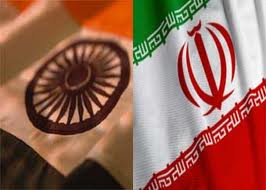
Iran gives India's ONGC ultimatum to sign gas deal


Iran has given India's Oil and Natural Gas Corporation (ONGC) a one-month deadline to sign the contract for the development of Iran's offshore Farzad-B gas field in the Persian Gulf.
Two informed sources speaking to Dow Jones on condition of anonymity said a team from the ONGC would visit Iran later this month to continue talks for signing the service contract to develop the gas field, which lies in the Farsi block to the north of Qatar. "ONGC wants to keep Iran engaged. It plans to continue talks and seek more time for decision-making," one of the sources said, adding, "Under the current political climate, there's no way ONGC can do anything more than that." The ONGC, the operator of the Farsi block, owns 40-percent of its interest. The state-run Indian Oil Corporation and Oil India Ltd. own the remaining shares in the consortium. In 2002, they won the National Iranian Oil Company's exploration service contract for the block and declared Farzad-B gas field commercial in 2008 after drilling several wells. This comes while the ONGC has not signed the development service contract or committed any investment for the gas field so far. The company is likely to seek more time from Iran to find a way around recent financial sanctions imposed on the Iranian oil and financial sectors by the US and the European Union. The Press Trust of India, quoting an unnamed official, reported in October 2010 that the ONGC has estimated the cost of developing Farzad-B gas field to be at about USD 5 billion over seven to eight years. Oil experts believe the ONGC has been delaying the negotiations with Iran as it does not want to abandon a promising discovery and hopes further improvements in business conditions.
On New Year's Eve,
US President Barack Obama signed into law fresh unilateral economic sanctions against Iran's Central Bank and oil sector aimed at preventing other countries from importing Iran's crude oil. The EU followed suit by slapping new sanctions against Iran's oil imports in a meeting of the bloc's foreign ministers on January 23. EU sanctions also include a freeze on the assets of the Iranian Central Bank in member countries and a ban on the sale of grains, gold, diamonds, and other precious metals to Iran. The US, Israel and EU accuse Tehran of pursuing military objectives in its nuclear program, but Tehran insists that as a signatory to the Nuclear Non-Proliferation Treaty and a member of the International Atomic Energy Agency, it has a right to use nuclear technology for peaceful purposes.

Sunday, January 15, 2012

NEWS,15.01.2012.

              ALL OPTIONS ON TABLE OVER IRAN

Britain is not ruling out military action against Iran, Foreign Secretary William Hague has said Foreign Secretary William Hague says Britain is not ruling out military action against Iran but remains focused on trying to secure peaceful negotiations.
He insisted all options remained on the table in relation to Tehran's "increasingly dangerous" development of nuclear weapons.
But he said the UK was not advocating military action and was instead intensifying sanctions in a bid to bring the Islamic republic to the negotiating table.
"We have never ruled anything out. We have not ruled out any option, or supporting any option. We believe all options should be on the table, that is part of the pressure on Iran,"
"But we are clearly not calling for or advocating military action. We are advocating meaningful negotiations, if Iran will enter into them, and the increasing pressure of sanctions to try to get some flexibility from Iran."
Western governments, including Britain, have moved to step up sanctions over Iran's nuclear programme, threatening an embargo on vital oil exports.
Tehran has threatened to block the Straits of Hormuz oil shipment route in response.
Prime Minister David Cameron, during a visit to Saudi Arabia on Friday, warned Iran that the world would "come together" to ensure the straits remained open.
Mr Hague said: "This is an increasingly dangerous situation that Iran is developing a military nuclear programme.
"Our sanctions are part of getting Iran to change course and to enter negotiations and we should not be deterred from implementing those."

Monday, January 9, 2012

NEWS,09.01.2012.

The richest countries by 2050

Which countries will be wealthiest 40 years from now?


Share this Gallery
Say what you will about Goldman Sachs, but the investment firm does seem to grasp the next big thing. Jim O'Neill, Goldman's Chairman of Asset Management, you may recall, is the man largely credited with minting Brazil, Russia, India and China as the planet's next economic drivers - way back in 2001.
So regardless of how you feel about the notorious company's practices, when Goldman Sachs releases a projection report, the world listens. Recently, the Manhattan-based multinational announced its forecast for the richest countries by GDP per capita in 2050, considering Brazil, Russia, India and China, the N-11 and G7 nations*. Which country may be wealthiest 40 years from now? Click through to find out.
*N-11, or "Next Eleven," nations consist of economically growing countries Bangladesh, Egypt, Indonesia, Iran, Mexico, Nigeria, Pakistan, Philippines, South Korea, Turkey and Vietnam. G7 membership includes France, Germany, Italy, Japan, United Kingdom, United States and Canada. All figures in this feature are in USD. Current GDP per capita figures are current as of 2010, sourced from the CIA World Factbook.
10   …2
GDP per capita, now: $12,300
GDP per capita, 2050: $48,000

Turkey is a hot economy today - one of the world's fastest-growing, despite skyrocketing inflation - and Goldman Sachs sees nothing to suggest the fun won't continue. According to the bank's projections, Turkey's GDP per capita will balloon nearly four-fold by 2050, a staggering jump matched in relation by only one other country on this list. As a point of reference, $48,000 as a GDP per capita figure is more than 20 per cent higher than what Canada ($39,400) can boast today.
9   …3
GDP per capita, now: $30,500
GDP per capita, 2050: $58,000

Greece may get the brunt of the blame for the ongoing Eurozone crisis, but not without its faults today is Italy, where new premier Mario Monti is still drowning in national debts just months after being sworn in. 
Goldman has strong projections for Italy a few decades from now, though. By 2050, according to the bank, Italy will maintain its economic powerhouse status (10th-largest economy in the world, the bank projects) and will nearly double its GDP per capita.


8   …4
GDP per capita, now: $15,900
GDP per capita, 2050: $62,000

Goldman Sachs continues to be bullish on Russia, and its latest projections surely reflect the bank's forecast for the nation. Russia is at the heart of Goldman's 'BRIC' countries - Brazil, Russia, India and China - that the firm contends could outpace the economies of the G7 nations as early as 2027. According to the bank's forecast, Russia's GDP per capita, like Turkey's, will balloon nearly four-fold by 2050, when it will lay claim to the world's fifth-largest economy - ahead of major traditional powers like the U.K. and Japan.
 7 …5
GDP per capita, now: $30,000
GDP per capita, 2050: $63,000

Today, on the CIA World Factbook's database rankings, South Korea's GDP per capita falls just one spot (44th overall) behind Italy (43rd). It's a small deficit - Italians produced just $500 more per year than South Koreans did in 2010 - but the two countries will switch spots by 2050, Goldman Sachs predicts. By then, where GDP per capita is concerned, South Korea will out-produce Italy by about $5,000 per resident.

…6
GDP per capita, now: $34,000
GDP per capita, 2050: $68,000

The people of Japan don't care much for how its economy will fare in 2050; they're looking for fiscal prosperity now. 
Indeed, Japan's 2011 was positively ruined by the earthquake and tsunami that hit last March, and much speculation wonders if the island nation can get back on its feet this year, not four decades down the road. In any case, Goldman Sachs considers the long-term prospects of Japan to be sturdy, and by 2050 it will own a larger economy than big European names like France, Germany and Italy.
5  ..7
GDP per capita, now: $35,700
GDP per capita, 2050: $69,500

Economic measuring sticks are sometimes tough to figure. For instance, by Goldman Sachs' projections, Germany's economy will be just a fraction as that of Brazil or India in 2050. But perspective switches when you look through a different kaleidoscope. 
According to Goldman, Germany's GDP per capita figure of $69,500 will be light years ahead of Brazil ($45,000) and India ($18,000) in 2050, meaning the Euro nation, despite overall dollar figures, will continue to be one of the world's wealthiest countries.
4  …8
GDP per capita, now: $33,100
GDP per capita, 2050: $74,000

For all Goldman Sachs thinks of Germany, which the bank says will nearly double its current GDP per capita by 2050, France is even more of a darling in the firm's eyes. Today, France's GDP per capita is $2,600 less than Germany's, but the countries may flip in the world rankings a few decades down the road. If Goldman's projections hold true, France's GDP per capita will go from $2,600 less than Germany's today to $4,500 more when 2050 rolls around.
3 … 9
GDP per capita, now: $34,800
GDP per capita, 2050: $78,000

The U.K. isn't Europe's richest economy in terms of GDP per capita (that distinction belongs to mini-nations Liechtenstein and Luxembourg), but it is the continent's wealthiest within the G7, the body considered for its 2050 predictions by Goldman Sachs. According to the bank, the U.K. will be the sixth-largest economy in the world by 2050, bigger than the financial systems in Japan and other Euro powerhouses France, Germany and Italy.

2   ..10
GDP per capita, now: $39,400
GDP per capita, 2050: $79,500

Who knows how this projection will bear out for Canada over the next five years, let alone by 2050? Certainly, there is great immediate potential in Canada's economy, especially if the proposed Keystone pipeline extension is approved, and Alberta's oil-sands turn us into the western world's energy superpower. Regardless of our prospects, Goldman's projections look favourably on Canada as it stands today, forecasting a GDP per capita that will more than double by 2050. Only one nation measured by Goldman will boast a higher GDP per capita in 2050 than Canada.

1   …11

GDP per capita, now: $47,200
GDP per capita, 2050: $85,500
By Goldman's projections, the U.S. economy will be the second-largest in the world in 2050, dwarfed only by China, whose financial system is forecast to be then nearly twice as large as America's. But again, GDP per capita tells a different story.
America's GDP per capita will make it the wealthiest nation surveyed by Goldman Sachs in 2050, when each Yankee will produce more than $85,000 annually. By contrast, China's GDP per capita will reach just over $40,000 by 2050, meaning the Asian country will own the world's largest economy but as a nation won't even be as rich as Mexico (projected 2050 GDP per capita: $47,500).